













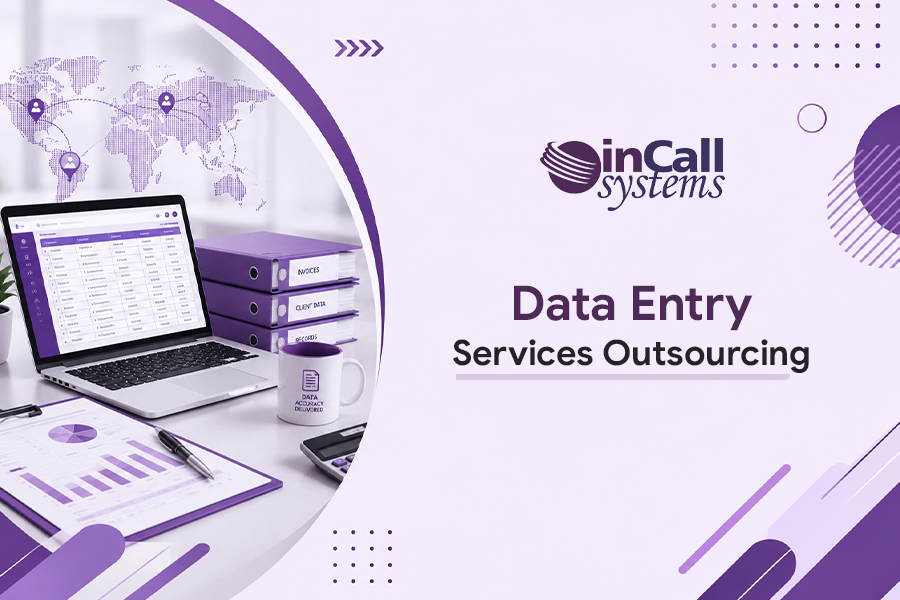
Data Entry Services Outsourcing: Key Benefits and Common Challenges
Handing off data entry feels obvious. It’s repetitive, it eats hours, and nobody on a sales team enjoys doing it. Then a campaign launches against a list full of duplicates and half-finished records, and the maths looks different. Data entry services outsourcing works extremely well when the arrangement is set up properly and causes real damage when it isn’t. What follows covers both sides honestly.
What the Work Actually Covers
Far more than typing.
Records get keyed, checked, deduplicated and pushed into a consistent format. Contact details get validated. Company names get standardised so one organisation doesn’t show up under four spellings.
Beyond that sits enrichment — appending missing titles, phone numbers or industry codes to records carrying only half the picture. Then maintenance, since a database decays roughly a third every year as people change jobs.
None of it is interesting. All of it decides whether anyone can trust what they’re looking at.
The Genuine Benefits
Volume handling comes first. Cleaning fifty thousand records internally means pulling people off revenue work for weeks.
Cost sits second, and not simply on hourly rates. The real saving is in not recruiting, training and supervising a function that only runs flat out a few weeks a year.
Speed matters too. A dedicated team clears in days what an internal person squeezes into gaps between other duties.
And quality control, oddly enough. A decent data entry services provider runs sample audits and verification steps that almost nobody applies to in-house work, because in-house work rarely gets audited at all.
Where It Goes Wrong
Accuracy is the obvious risk, and the one everyone worries about.
Cheap providers hit volume targets by skipping verification. Errors don’t announce themselves either — a wrong phone number just fails quietly during a campaign, and nobody traces it back to the data.
Then there’s context. Someone unfamiliar with a market keys a Thai company name inconsistently, or misreads an address format, and the record technically exists while being useless.
Communication gaps cause the rest. Vague briefs produce output that meets the letter of the instruction and misses the point entirely.
Security Is the Underrated Challenge
Contact databases carry personal information, which makes this more than an operational question.
ISO 27001 certification signals that information security is built into a recognised standard — not something that just depends on individual habits. Worth verifying rather than assuming, since plenty of firms call themselves secure without holding anything formal.
Regional compliance adds another layer on top of that. Lists used for outreach in Singapore need to be checked against the Do Not Call registry — and any data entry services provider working in that market should treat that as standard practice, not something optional.
Questions to Ask Before Signing
What’s the error rate, and how is it actually measured?
Anyone who answers vaguely is guessing. Double-entry verification, sample auditing and automated format validation all work — what matters is that something exists and gets reported.
Then ask what happens when errors surface. A provider that flags and reports beats one that quietly corrects and mentions nothing, because the second approach hides patterns you’d want to know about.
Ask about turnaround under load, too. Plenty of firms handle steady volume competently and fall apart when a deadline compresses.
Why Regional Knowledge Matters in APAC
Data across this region is messier than most.
Names transliterate several ways. Address formats differ from country to country. Naming conventions in Indonesia look nothing like those in Vietnam.
Teams working across those markets with local language capability catch problems an offshore operation elsewhere simply won’t see. That difference shows up in match rates rather than in the invoice.
Getting the Brief Right
Most failures trace back to the instructions rather than the execution.
Specify the schema. Define what actually counts as a duplicate. State which fields are mandatory, and what should happen when one can’t be filled. Say whether partial records get kept or rejected.
An hour spent upfront saves a fortnight of corrections down the line. It also gives both sides something concrete to measure the output against — which turns disagreements into problems that are actually fixable, rather than arguments that go nowhere
What Good Output Looks Like
Clean, current, properly segmented, and usable by a sales team without further work.
Duplicates removed. Fields consistent. Records dated so nobody calls from something eighteen months stale. Reporting attached showing what was processed, what was rejected and the reasoning behind it.
That reporting layer is what separates a supplier from a partner.
Conclusion
Database quality shapes how every campaign downstream performs, which makes it an odd place to chase the lowest quote. inCall Systems Pte Ltd handles data entry within a broader database services offering from Singapore, backed by ISO certification and more than twenty years working with B2B contact data across Asia Pacific. Settle the process questions first. The pricing conversation makes considerably more sense once you know what’s behind the number.
FAQs
How can a data entry services provider improve business efficiency?
Cleaning fifty thousand records internally pulls staff off revenue work for weeks. A data entry services provider handles that volume with verification steps already built in, so sales teams work from data they can trust.
Can data entry outsourcing help reduce operational costs?
Usually, yes. The saving isn't only hourly rates — data entry services outsourcing removes the cost of recruiting, training and supervising a function that runs flat out only a few weeks each year.
When should a business consider data entry services outsourcing?
When volume starts pulling people off revenue work, or before a campaign built on stale records. Data entry services outsourcing also makes sense when nobody internally audits accuracy, since errors otherwise go unnoticed until they cost something.










Leave a Reply