











Emergency Response and Service Request Handling: A Complete Guide
A server crashes at 2 AM on a Saturday. The monitoring alert fires. The ticket enters the queue. And then nothing happens for four hours because the on-call technician missed the notification, the escalation path routes through a manager who is on holiday in Bali, and the backup contact listed in the system left the company six months ago but nobody updated the record. By the time somebody actually looks at the problem, the client’s critical business systems has been down for half a working day in three Asian time zones, and the damage calculation already has more digits than anybody in the room wants to see.
That scenario separates companies that handle urgent situations from companies that merely have a policy document about handling urgent situations. The policy exists. The flowchart sits on a SharePoint page somewhere. But when the phone rings at an inconvenient hour with a genuinely angry person on the other end describing a genuinely broken system, the gap between documented process and actual execution reveals itself in the worst possible way.
What Is Emergency Cases Handling?
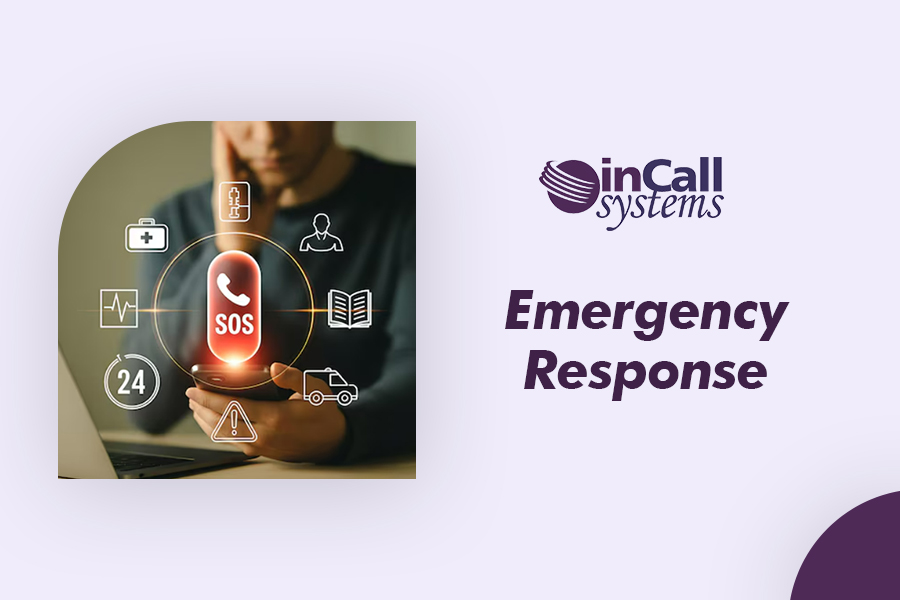
Emergency cases handling is the work that can’t wait for Monday morning or the next review meeting. A key system crashes, an intruder gets into your data, hundreds of users lose service, or a faulty machine puts staff at risk. The job is to catch these cases early, decide which one needs attention first, and fix each before it gets worse.
The defining feature of emergency cases handling is time sensitivity. A standard service ticket can sit in a queue for twenty-four hours without consequence. An emergency ticket sitting in queue for twenty-four minutes might already be too late. The processes, staffing models and communication protocols for emergencies look fundamentally different from regular operations because the cost of delay scales exponentially rather than linearly.
Speed in an emergency comes down to whether the first person who answers can actually act. Suppose a frontline agent gets a call about a failed system. If they can dispatch a technician or turn on the backup themselves, the problem is contained quickly. If they have to file a ticket and wait for sign-off, it gets worse while the approval works its way up, and no amount of polish on the intake process changes that.
How Does Emergency Response Work?
Hospitals don’t treat patients in the order they arrive, and a good emergency response team doesn’t either. It looks at what is actually wrong, not how loudly the caller says it. Someone who rings at 11 PM on a Tuesday about a billing error is fed up, but the issue will keep until the morning. Someone whose payment gateway went down mid flash sale is losing sales with every minute that passes, and that call gets a person working on it immediately.
The triage happens at first contact. A trained agent assesses severity, impact scope and time sensitivity within the first two minutes of the call. Emergency response protocols assign categories — critical, high, medium, and low— and each category triggers a different workflow. Critical gets an immediate warm transfer to the specialist team with a conference bridge opened before the caller finishes describing the problem. High gets a callback within fifteen minutes from a qualified technician. Medium enters the priority queue for next-business-hour resolution.
That categorisation saves the operation from treating everything as critical, which is the same as treating nothing as critical because the response team burns out within a week and starts treating every call with the same exhausted half-attention regardless of actual severity.
Proper emergency response also includes communication protocols that most companies forget until the middle of a crisis. Who notifies the client’s management? How frequently do status updates go out? What channel carries those updates — email, SMS, phone call, dedicated status page? Silence during an emergency doubles the client’s anxiety and triples the number of inbound calls asking for updates, which clogs the phone lines and slows down the actual resolution work.
Why Service Request Handling Matters
Not everything is an emergency, but everything still needs handling. Service request handling covers the full spectrum — password resets, account modifications, information requests, feature queries, installation scheduling, configuration changes. These tickets lack the adrenaline of a critical outage but carry their own weight because collectively they represent the daily experience that determines whether a client considers the service relationship functional or frustrating.
A company processing three hundred service requests per day that averages two-day resolution times is not technically failing. Nothing is on fire. No SLA breach triggers. But the clients waiting two days for a password reset or a billing adjustment are quietly adding that experience to the mental tally that eventually produces the “exploring other vendors” conversation.
Service request handling efficiency determines client retention far more than most companies’ measure. The emergency gets the post-mortem, the executive review and the process improvement initiative. The routine ticket that took five days instead of one gets no review at all — and causes more cumulative dissatisfaction than the emergency ever did because it happens two hundred times a month.
What Is Service Request Routing?
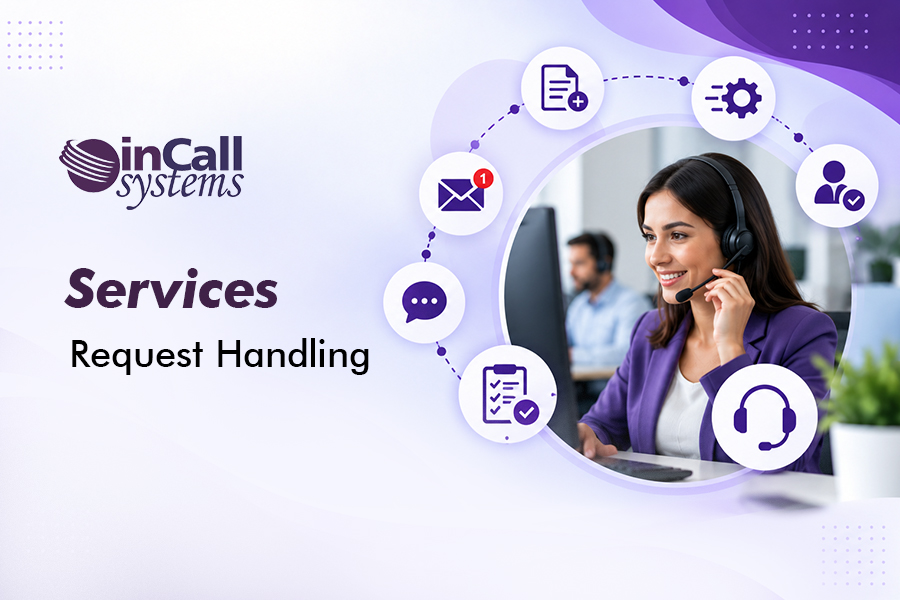
Service request routing directs each incoming request to the team or individual best equipped to resolve it. A technical issue routes to engineering. A billing question routes to finance. A product feature request routes to the product team. An access provisioning request routes to IT administration.
Sounds obvious. In practice, service request routing goes wrong constantly because the intake categorisation relies on the client’s description of the problem, and clients describe problems in terms of symptoms rather than root causes. “The system is slow” might be a network issue, a database problem, a client-side browser issue or a capacity constraint — each one belonging to a different resolution team. Route it wrong and the ticket bounces between teams for three days while everybody assumes somebody else owns it.
Intelligent service request routing uses structured intake questions to narrow the category before routing. Rather than asking “describe your issue” and hoping the free-text answer maps cleanly to a department, the intake process walks through diagnostic questions — when did the issue start, how many users are affected, does it reproduce consistently, which system or module is involved — and routes based on answers rather than assumptions.
How Emergency Response Speeds Up Case Handling
Speed in emergency response comes from preparation, not improvisation. The fastest response teams pre-build runbooks for the twenty most common emergency scenarios. Server down — here is the diagnostic sequence, here is the escalation path, here is the communication template. Security breach detected — here is the containment protocol, here is the notification sequence, here is the forensic preservation checklist.
Pre-built runbooks eliminate the thinking time that kills resolution speed during a genuine crisis. The technician responding at 3 AM does not need to invent a diagnostic approach from scratch. The runbook specifies the first five steps. If those five steps do not resolve the issue, the runbook specifies the escalation trigger and the next team that takes over. Emergency response built on runbooks produces consistent resolution times regardless of which individual happens to be on shift.
Common Challenges in Request Management
The hours outside the normal workday are where most companies are exposed. Covering a full 24 hours takes three shifts of trained people, and for a mid-sized business that’s hard to afford with an in-house team. So the overnight slot usually goes unstaffed or gets a single junior agent, someone who can’t make the call or fix the problem when a real emergency comes in.
This is where outsourced contact centre operations earn their cost. A telemarketing company handling only outbound campaigns cannot staff this. But a customer interaction centre with trained agents covering multiple time zones and multiple client accounts spreads the cost of twenty-four-hour coverage across a portfolio, making overnight staffing affordable for each individual client.
inCall Systems Pte Ltd operates from Singapore with over twenty-four years of experience running customer interaction centres, handling emergency triage, service request management, best lead generation services and multi-channel support across Singapore, Malaysia, Thailand, Vietnam, Philippines and Indonesia with local language capabilities.
How to Improve Emergency and Service Handling
Document the escalation paths and test them quarterly. An escalation path that routes to a manager who changed roles six months ago is not a path — it is a dead end wearing a label. Test every contact number, every email alias, every notification channel, and update the ones that fail before they fail during an actual emergency.
Build the intake process around diagnostic questions rather than open-text descriptions. Structured intake feeds accurate service request routing, which eliminates the departmental bouncing that adds days to resolution times while irritating everyone involved — the client, the agents and the teams receiving misrouted tickets.
Handing the front-end calls to lead generation services or a telemarketing partner frees your technical people to concentrate on solving the issue in front of them. It’s hard to troubleshoot well when the phone keeps ringing, and it’s just as hard to answer a caller properly with a half-finished diagnosis on your mind. Keeping those two jobs with different people usually gives better results on both.
The emergency runbook either works at 3 AM or it does not. The service request either reaches the right team on the first routing or it bounces. Those two facts determine whether the operation handles volume competently or simply survives it — and the clients can always tell which one it is.
FAQs
What does emergency cases handling involve?
The first step is spotting that a case is urgent. After that, the team decides how bad it is and sends whoever can fix it, and one person stays in touch with the client until it's sorted. There are set deadlines for escalating, and nobody has to guess how much they're allowed to decide on their own.
What are the key steps in an effective emergency response process?
Someone has to size up the problem first and bring in a specialist who can deal with it. They follow a checklist the team put together ahead of time, and the client isn't left waiting for news. After the fix, the team reviews what went wrong. That helps stop it happening again and makes the next response quicker.
Why is quick emergency response important for customers?
Because delay during critical situations causes escalating damage. Fast emergency response contains problems before they spread, protecting client operations, revenue and confidence in the service relationship.
Why is efficient service request handling important for businesses?
Routine tickets shape daily client experience more than emergencies. Efficient service request handling prevents backlogs, reduces frustration from slow resolutions and directly protects client retention rates across the entire account portfolio.
How does service request routing work?
Service request routing directs each ticket to the qualified resolution team using structured diagnostic intake questions rather than free-text descriptions, eliminating departmental bouncing and reducing average resolution times significantly.











Leave a Reply